


Quote
Subtotal: $0
Views: 0 Author: Site Editor Publish Time: 2026-03-26 Origin: Site
In the safe operation system of commercial vehicles, the braking system is a core device that safeguards driving safety, ensures transportation efficiency, and maintains public road safety. It is also an indispensable "safety barrier" for trucks during operation. Compared with passenger cars, trucks feature heavy load capacity, strong inertia, and complex operating scenarios (including long downhill sections in mountainous areas, long-distance highway driving, and full-load heavy-duty conditions). Therefore, their braking systems have far more stringent requirements in terms of design standards, structural composition, energy forms, and safety redundancy. This article will explain the core principles, structural components, and routine maintenance of truck braking systems, helping readers fully grasp the knowledge of this critical safety device and build a solid line of defense for driving safety.

A braking system is a complete assembly that decelerates, stops, and reliably holds a vehicle stationary after the driver exits. It mainly consists of front and rear wheel brakes, control devices, transmission devices, energy supply devices, and auxiliary braking devices. Vehicle braking relies on external forces opposing the direction of travel, but road-generated braking forces are uncontrollable and cannot precisely match driver input. A dedicated braking mechanism is therefore required to deliver controlled braking force to the wheels, enabling safe, predictable deceleration and stopping.
1. Service Braking: Enables controlled deceleration and emergency stopping in daily driving and crisis situations. The system rapidly converts kinetic energy into heat to avoid collisions.
2. Parking Braking: Secures the vehicle on flat or sloped surfaces to prevent rolling. The high weight of trucks creates significant gravitational forces even on gentle grades, requiring strong holding torque.
3. Overall Safety Protection: Brake failure on a truck can cause casualties, cargo damage, and severe road hazards. The braking system serves as the final safety barrier for drivers, vehicles, cargo, and other road users.
· Driving Efficiency: A stable, reliable braking system allows higher average speeds and improved transport productivity.
· Safety: Prevents brake failure, deviation, and skidding, reducing crash risk.
· Parking Stability: Maintains vehicle lockout when stationary, supporting loading/unloading, rest stops, and long-term parking.
· Braking Efficiency: Measured by braking distance and deceleration – the most basic performance metric.
· Braking Efficiency Stability: Also called heat fade resistance, maintaining braking power during prolonged use.
· Braking Directional Stability: Ensures no skidding, deviation, or loss of steering control during braking.
1. Service Braking: Mostly dual-circuit air braking; independent front and rear axle circuits prevent total failure.
2. Parking Braking: Primarily spring-stored air-release braking; some light trucks use driveshaft braking.
3. Emergency Braking: Integrated with parking braking, using spring energy for forced braking.
4. Auxiliary Braking: Engine exhaust braking, hydraulic retarders, and eddy current retarders – lifesavers on long downhill grades.
1. Service Braking: Dual-circuit hydraulic braking with independent circuits.
2. Parking Braking: Central (driveshaft) or wheel-end braking using high-force compression springs.
3. Emergency Braking: Shared with service or parking systems.
4. Auxiliary Braking: Mainly engine exhaust braking.
Other subsystems include the Anti-lock Braking System (ABS) and dedicated auxiliary braking devices, which are explained in detail below.
Hydraulic braking uses brake fluid as the power transmission medium, based on Pascal’s principle. It converts mechanical force from the pedal into hydraulic pressure, which acts on wheel brakes. Features include simple structure, fast response, and low maintenance cost, making it suitable for light duty commercial vehicles.

· Function: Smooth deceleration, emergency stopping, and speed control on short downhill sections.
· Components: Brake pedal, master cylinder, wheel cylinders, axle brakes, brake lines, vacuum tank.
· Core Design: Dual-circuit system – front and rear axles use independent circuits to avoid total failure.

· Type II (Axle-to-Axle): Simple layout, widely used; but failure disturbs front–rear braking balance.
· Type X (Crossed): Diagonal wheel pairing; retains 50% braking power if one circuit fails, offering excellent stability.
· Types HI, LL, HH: Complex, costly, and rarely used in commercial vehicles.

· Function: Reliable parking, hill-start assistance, and emergency stopping.
· Structure: Central (driveshaft) or wheel end braking, using mechanical spring force independent of the hydraulic system.
· Emergency Use: Activated via the parking brake lever if service braking fails.

Medium and heavy-duty trucks (load > 10 tons) universally use compressed air braking (air braking). It provides high braking force, strong safety redundancy, and stable performance under heavy loads and long-distance operation. The air-release brake (spring storage braking) is its defining safety feature.
· Function: Deceleration and stopping for heavy-duty vehicles at speed or under full load.
· Components: Brake pedal, brake valve, brake chambers, air dryer, four-circuit protection valve, relay valve, air reservoirs, air compressor, and air lines.


The driver presses the pedal → the control valve opens → high pressure air (0.7–0.9 MPa) flows from reservoirs to brake chambers → push rods actuate brakes → friction converts kinetic energy to heat. Releasing the pedal exhausts air and releases brakes.
Note: Air braking has a slight delay (0.2–0.5 seconds), requiring early driver anticipation.
· Air Compressor: The “heart” of the system, driven by the engine to supply high-pressure air.

· Air Reservoirs: Store compressed air; separate wet and dry reservoirs remove moisture.

· Integrated Air Dryer + Four-Circuit Valve: Dries air and distributes pressure to four independent circuits.

· Relay Valve: Accelerates response and reduces lag near the wheels.

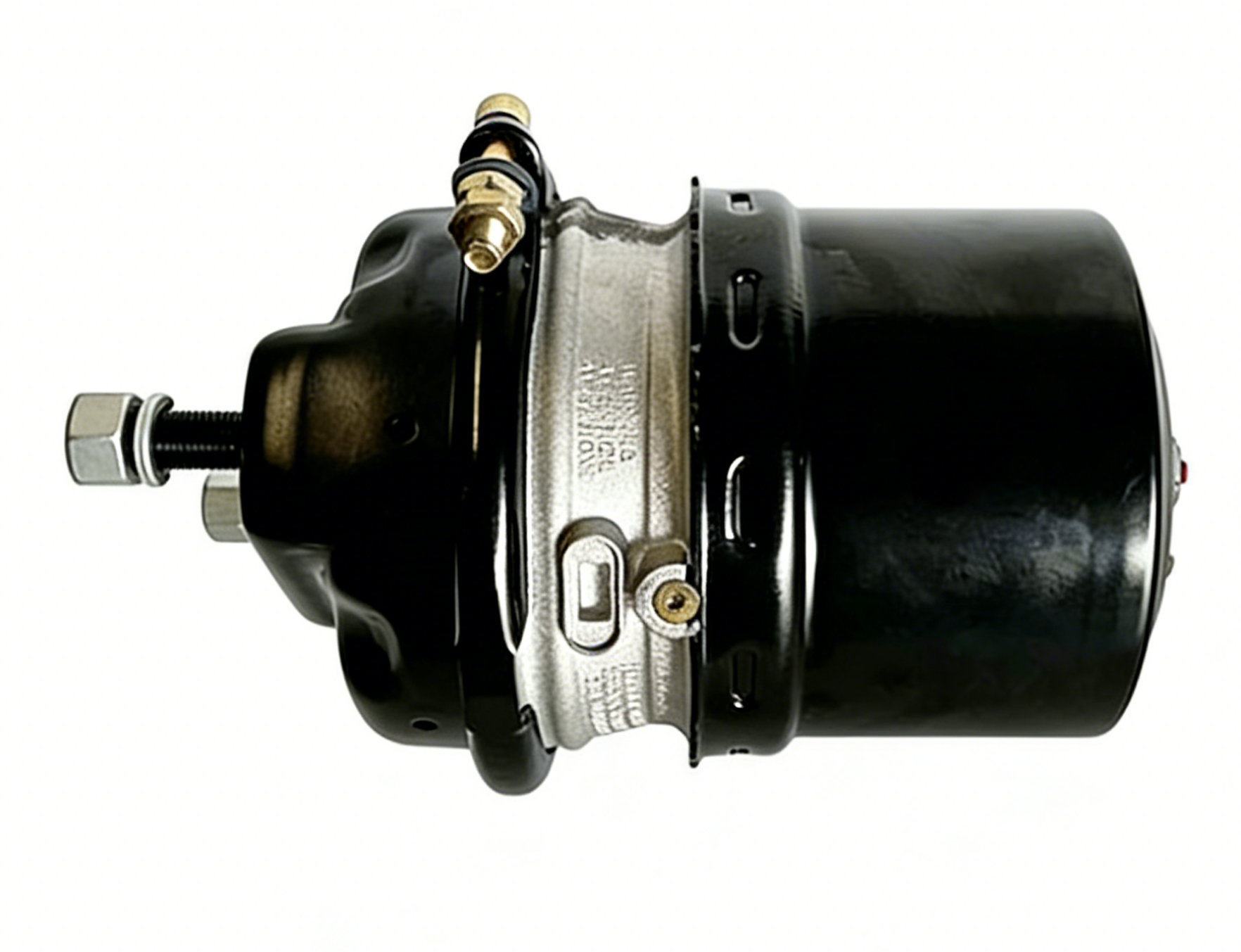
· Brake Chambers: Convert air pressure into mechanical thrust.
o Front chambers: service braking only.
o Rear spring brake chambers: dual-mode – diaphragm for service braking, spring for parking/emergency braking.
· Trailer Valve: Synchronizes braking between tractor and trailer.

· Working Principle: Charged air releases the brake; loss of pressure engages the spring brake automatically.
· Safety: Brakes lock if pressure drops below 0.4 MPa, preventing unsafe operation.

ABS is a mandatory mechatronic safety device that prevents wheel lock-up during hard braking.

Maintains optimal slip ratio (15–20%) for maximum braking force while preserving steering control and stability, especially on wet or icy roads.
· Wheel Speed Sensors + Tone Rings: Monitor wheel rotation.
· ECU: The “brain” that calculates slip and issues commands.
· ABS Solenoid Valves: Adjust brake pressure in real time.
Detect → Judge → Regulate – repeated rapidly to prevent lockup without driver intervention.
Auxiliary brakes do not rely on friction pads and are essential for reducing heat fade and protecting service brakes on long descents.
1. Exhaust Braking (WEVB): Restricts exhaust flow to create backpressure; simple, low-cost.
2. Compression-Release Engine Braking: High-power braking for heavy trucks; stops fuel injection and releases compressed air to generate strong negative engine torque.
· Uses fluid damping between stator and rotor; high torque, no wear.
· Advantages: strong, smooth, stable temperature control.
· Disadvantages: slight lag, minor parasitic power loss.

· Uses electromagnetic induction; contactless, ultra fast response (≈40 ms).
· Extends service brake life by 4–7 times and tire life by 20%.
· Ideal for frequent speed changes in mountains and urban areas.

Brakes are the friction components that produce actual braking torque.

· Structure: Brake disc, caliper, friction pads, piston.
· Types: Floating caliper, full disc, circumferential disc (commercial vehicle innovation).
· Advantages: Excellent heat dissipation, stable performance, strong resistance to fade, easy maintenance, stable in wet conditions.
· Trend: Becoming standard on light, medium, and heavy trucks.

· Structure: Brake drum, brake shoes, cams, pushrods.
· Advantages: Low cost, high initial braking force, durable shoes.
· Disadvantages: Poor heat dissipation, prone to fade, unstable braking, requires frequent adjustment, generates dust.
· Maintenance Rules: Replace riveted shoes at <0.8mm friction thickness; bonded shoes at <1.6mm.


· Light Duty: Foton Aoling CTS 204 (front disc rear drum), Jiangling Shunda Wide Body (full disc), FAW Tiger VN (front disc rear drum).
· Medium/Heavy Duty: FAW J7 (full disc high end), Dongfeng Tianlong KL (front disc rear drum; full disc for hazardous goods), Sinotruk Howo TH7 (hazardous goods version full disc), Shacman Delong X5000 hazardous goods edition (full disc).
· Light Duty: Foton Times Xiaoka Star 3 (low trim), Dongfeng Xiaokang C31 mini truck.· Older Heavy-Duty: FAW J6P (pre 2018), Sinotruk Howo 336 classic.
Brake pads are the most critical wear parts in the braking system.

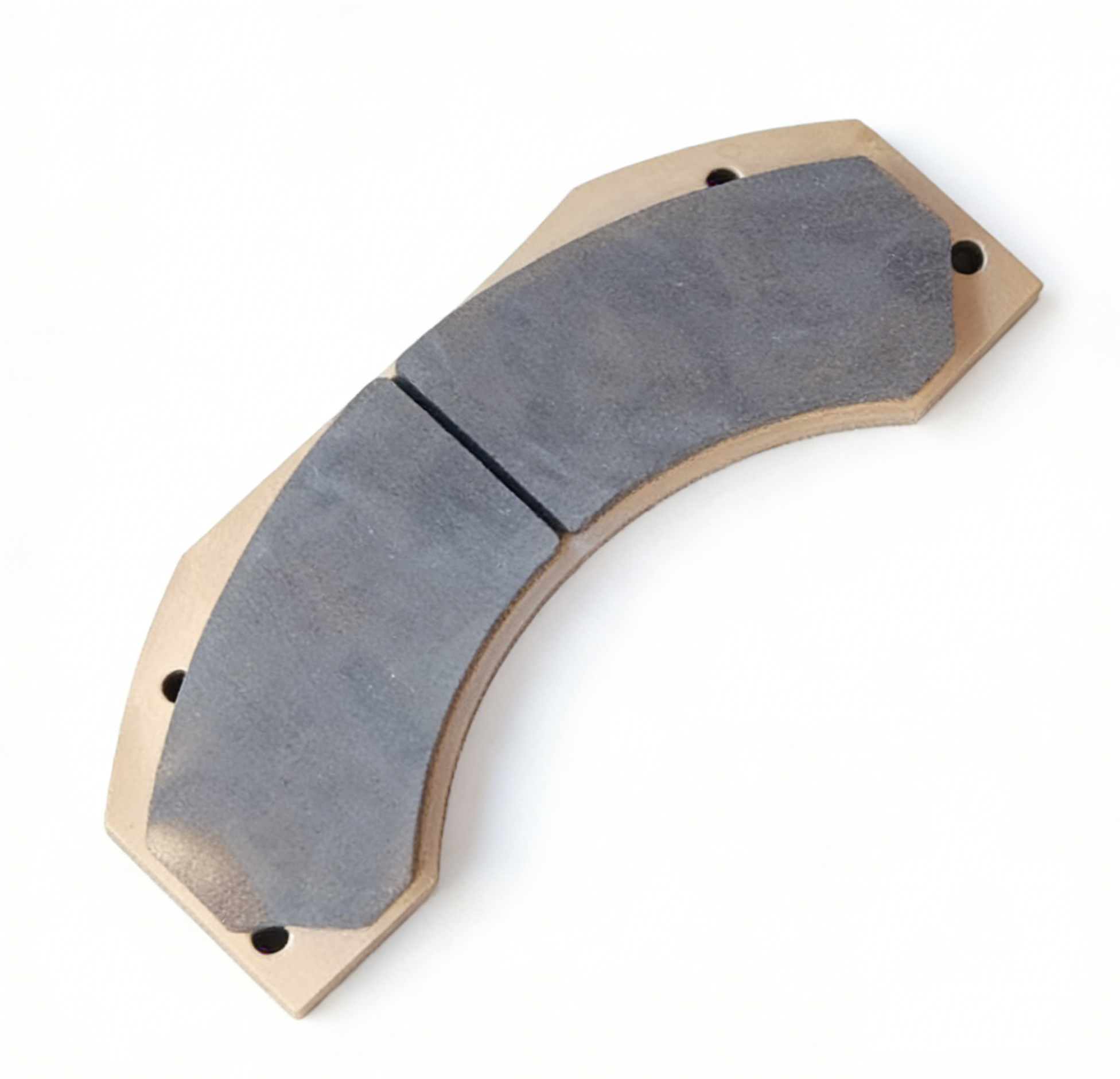
Friction components pressed against drums or discs by cams or pushrods, consisting of friction material, steel backing, and dampening layer.
· Semi-Metallic: High strength, good thermal conductivity; for heavy-duty use.
· Non-Asbestos Organic (NAO): Long life, low noise, low drum/disc wear; widely used.
· Ceramic: Ultra-high temperature resistance, quiet, clean, long-lived; premium choice for hazardous goods and high-end trucks.
· Wheel lockup
· Longer stopping distance
· Rapid rotor/drum wear
· Severe noise and vibration
· Toxic asbestos dust in some inferior products
Brake failure is one of the most dangerous truck faults. Correct emergency action directly reduces risk.
1. Stay calm, hold the steering wheel firmly.
2. Shift down rapidly to use engine compression resistance.
3. Apply parking brake slowly to avoid wheel lockup and skidding.
4. On upgrades: downshift early; use roadside obstacles if needed.
5. On downgrades: never coast in neutral; use emergency escape ramps if available.
Test brakes gently before long/steep descents. Slow early at intersections, curves, and congestion. Maintain safe following distance under full load to reduce emergency stops.
A truck’s braking system is far more than just a “brake.” It is the most important safety barrier, protecting drivers, cargo, and everyone on the road. Whether air brake or hydraulic brake, disc or drum, the core purpose is the same: to keep heavy trucks running steadily, stopping safely, and traveling securely.
Understanding, properly using, and well maintaining these systems not only extends vehicle life but also protects lives when it matters most.


